Category Archives: JavaScript

Why JWT Is Better Than Other Authentication Methods for Security?

JWT-With-Next.js

Why JWT (JSON Web Token) Is Best Compared to Other Authentication Methods

JSON Web Token (JWT) is one of the most popular authentication mechanisms used in modern web applications, mobile apps, and microservices. Its stateless, flexible, and scalable nature makes it superior to traditional authentication systems like session-based authentication, cookies, and API keys. This article explains why JWT is considered the best choice in many development environments.

Continue reading

Is Django REST API Integration Easy With Next.js for Developers?

Django REST Framework (DRF) and Next.js make a powerful combination for building modern, high-performance applications. DRF handles backend logic, authentication, and data management, while Next.js provides a fast React-based frontend with server-side rendering (SSR) and static site generation (SSG).
The integration process is simpler than most developers expect, thanks to clear API endpoints and flexible fetch methods in Next.js.

Continue reading

Top Benefits of Using React Native for Modern Mobile App Development

React Native has emerged as one of the most trusted and widely used frameworks for building high-performance mobile apps. Developed by Meta (Facebook), this powerful technology allows developers to create Android and iOS applications using a single JavaScript codebase. Businesses worldwide prefer React Native because it reduces development time, simplifies maintenance, and still offers the exceptional performance and UI quality of native applications.

By combining native components with JavaScript logic, React Native ensures apps feel responsive, fast, and highly interactive. The framework is supported by a massive community, a rich ecosystem of libraries, and continuous improvements that make it future-ready. Whether you’re building e-commerce, healthcare, finance, or on-demand apps, React Native provides all the tools necessary to deliver a seamless mobile experience.

Below are the major benefits that make React Native a top choice for modern mobile app development:

Major Benefits of Using React Native for Mobile App Development

1. Cross-Platform Development from a Single Codebase

React Native allows developers to use one codebase for both Android and iOS.
This saves:

  • Time

  • Resources

  • Team size

  • Development cost
    Businesses can launch apps faster and update them easily.

2. Native-Like Performance and Smooth User Experience

Unlike older hybrid frameworks, React Native uses real native components.
This ensures:

    • Fast loading times

    • Smooth animations

    • High FPS performance

    • Better UI responsiveness
      It delivers an experience close to fully native apps.

Continue reading

50 Mobile App Ideas for Beginners using React Native and Flutter

πŸ“± 50 Mobile App Ideas for Beginners using React Native & Flutter

Getting started with mobile app development using React Native or Flutter? Whether you’re a complete beginner or learning to build real-world projects, these 50 mobile app ideas will help you practice, grow, and even build portfolio-ready apps.

🟒 Why Practice with App Ideas?

  • βœ… Understand real-life use cases
  • βœ… Learn state management, navigation, and API calls
  • βœ… Improve UI/UX design skills
  • βœ… Boost your confidence by building something useful

Continue reading

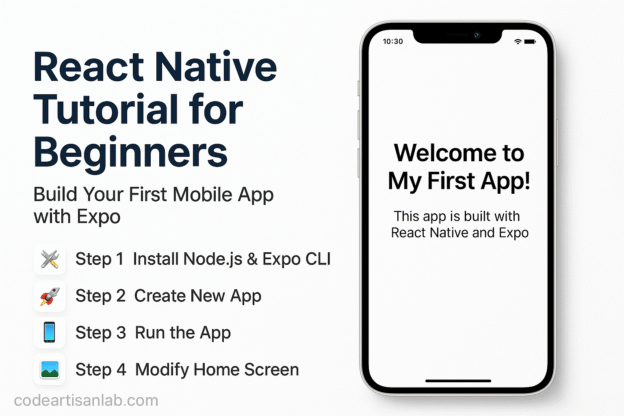
React Native Tutorial for Beginners: Build Your First Mobile App with Expo

πŸ“± Introduction

Welcome to your first mobile app development tutorial using React Native and Expo! This step-by-step guide is ideal for beginners who want to create Android and iOS apps using just JavaScript. Continue reading

Next.js tutorial 2025

Next.js Tutorial for Beginners: Create a Simple Blog App with Tailwind CSS

πŸš€ Introduction

In this tutorial, you’ll learn how to create a simple blog app using Next.js 14 and Tailwind CSS. This step-by-step guide is perfect for beginners who want to understand Next.js fundamentals like routing, pages, dynamic routes, and styling.

πŸ“¦ Step 1: Create a New Next.js App

Continue reading